Mona Lisa
Paris, FranceAvailable in the app
- العربيةArabic
- 中文Chinese
- NederlandsDutch
- English
- françaisFrench
- DeutschGerman
- हिन्दीHindi
- ItalianoItalian
- 日本語Japanese
- 한국어Korean
- русский языкRussian
- españolSpanish
- TürkçeTurkish
- PortuguêsPortuguese
As you enter Room 711 of the Louvre, the atmosphere begins to change. You’re about to encounter a painting that has crossed centuries, continents, and cultures to reach this very spot. And now, here it is—Leonardo da Vinci’s Mona Lisa, the most famous painting in the world.
At first glance, it may surprise you with its size. Measuring just 77 by 53 centimeters, it’s smaller than many grand Renaissance works. But don’t let its modest dimensions fool you. This painting has an extraordinary presence, drawing millions of visitors every year to stand in awe before it. Its fame isn’t just about its artistic brilliance—it’s about the stories, mysteries, and emotions it evokes.
Let’s begin with the woman herself. Who is the Mona Lisa? Her Italian name, La Gioconda, means “the happy one.” She is widely believed to be Lisa Gherardini, the wife of a Florentine merchant named Francesco del Giocondo. But why did Leonardo choose her as his subject? Some believe she was commissioned by her husband, while others speculate that Leonardo saw something unique in her—a quiet elegance, an inner mystery—that inspired him to create more than just a portrait.
Take a moment to study her expression. Her soft, faint smile has baffled art lovers and experts for centuries. Is she smiling with joy, or is there a tinge of melancholy in her gaze? Leonardo achieved this ambiguity using a technique called sfumato, where light and shadow blend seamlessly to soften edges. This creates a lifelike, almost dreamlike quality. Her lips, for instance, seem to shift depending on how you look at them—sometimes smiling, sometimes still. This was no accident. Leonardo, with his deep understanding of anatomy and light, wanted to capture not just a face, but a soul.
Now, let your eyes travel to her gaze. No matter where you stand, it feels as though she’s looking directly at you. This “Mona Lisa Effect” isn’t just an optical illusion—it’s the result of Leonardo’s genius. By carefully studying the way light interacts with the human eye, he created a sense of movement and life that continues to fascinate viewers.
The Mona Lisa’s story doesn’t end with her creation in the early 16th century. In fact, her journey is one of the reasons she’s so famous today. For centuries, she was admired by art lovers and royalty alike, but her true rise to global stardom began with an act of theft.
In 1911, the painting was stolen from the Louvre by an Italian handyman named Vincenzo Peruggia. Believing the painting rightfully belonged in Italy, he hid it in a trunk for two years. During its absence, the world was captivated. The mystery of its disappearance made headlines, and when the painting was finally recovered in 1913, its fame had grown immensely. It was no longer just a masterpiece; it had become a cultural phenomenon.
But the drama didn’t stop there. Over the years, there have been several attempts to damage the painting, including an acid attack and a rock thrown at its surface. These incidents led to the Mona Lisa being placed behind bulletproof glass, where she now rests safely. This glass might seem like a barrier, but it adds to her mystique—protecting her while allowing her timeless beauty to shine through.
Let’s return to the painting itself. Notice the landscape behind Lisa. It’s a dreamlike scene with winding paths, distant mountains, and a bridge barely visible through the haze. This imaginary background contrasts with the lifelike detail of Lisa’s face, creating a balance between the real and the surreal. Leonardo was not only a painter but also a scientist and inventor. His love for nature and his studies of geology and anatomy are reflected in every detail of this work.
Now think about the time it took to create this masterpiece. Leonardo began working on the Mona Lisa around 1503 and continued adding to it for years. Even when he moved to France under the patronage of King Francis I, he brought the painting with him, refining it until his death in 1519. This wasn’t just a portrait for Leonardo—it was a lifelong project, a reflection of his search for perfection.
Standing here, you’re part of a long tradition of viewers who have been captivated by the Mona Lisa. Imagine Napoleon Bonaparte hanging the painting in his private bedroom, or Pablo Picasso being questioned about its theft. Each person who has encountered this work has added their own layer to its legend.
So, take a moment. Forget the crowds around you and let yourself connect with her gaze. In her eyes, you’ll find the spirit of the Renaissance, the genius of Leonardo da Vinci, and the enduring mystery of a woman frozen in time. Her story began over 500 years ago, but it continues with you. What will the Mona Lisa reveal to you today?
To discover more about other paintings, exhibitions, or collections, please visit our main page and listen to our Louvre Museum audio guide.
Listen here
One full track per tour. The rest of the guide opens in the app.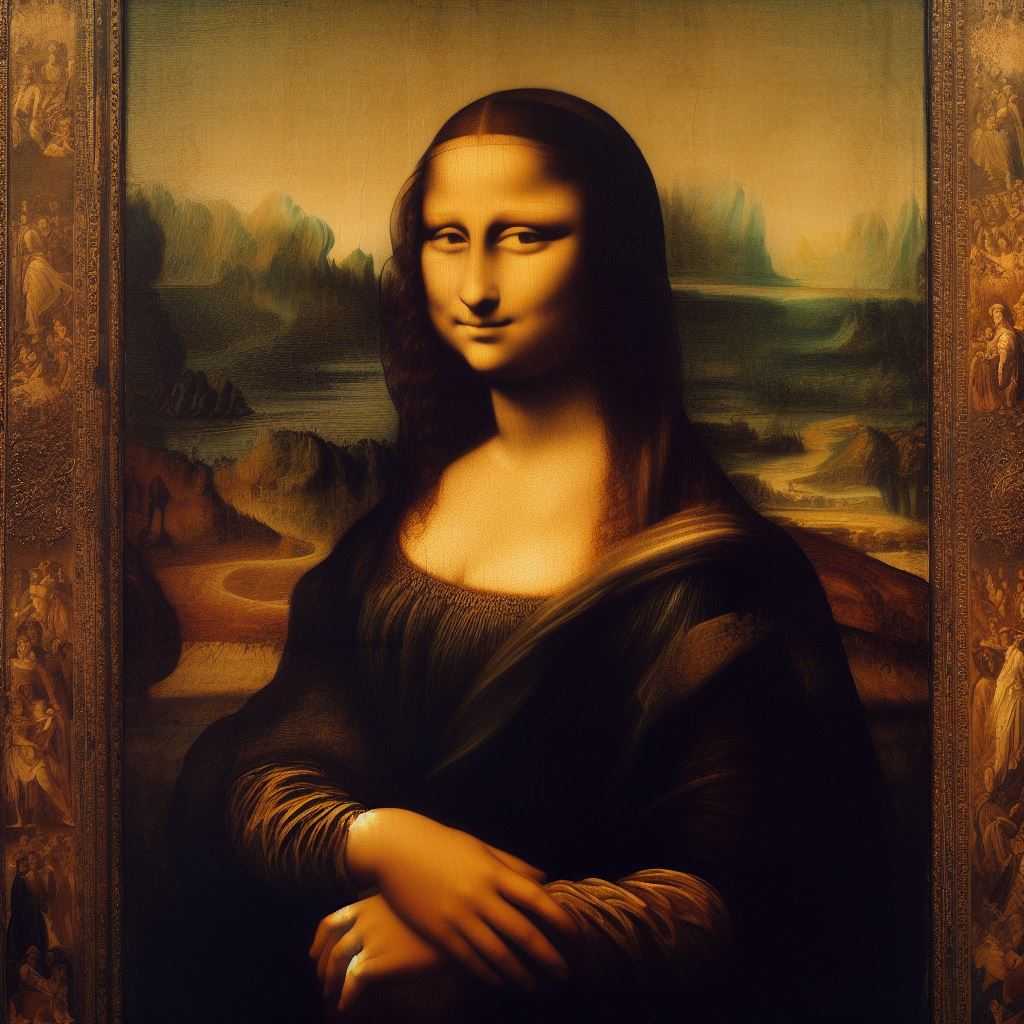
Continue in the app
Unlock every station, live tour audio, camera and games — without leaving the visit.